Author: PWG Publisher

Reflections

They’ve just gone out. Heard the door slam. Probably gone down the pub. So at least I’ll be OK for a few hours. Mind you if they come back in a mood, I’ll know it. Sometimes they come home like young kids, laughing, singing, then more drinking, and other stuff. Other times they’re rowing from the minute the front door opens. Shouting and swearing at each other, and then I’ll hear Mum scream, and I’ll know he’s hit her.

I can’t do anything about it. Can’t even get out of my room, cos they’ve taken the handle off the door. Can only open it from the outside. At first I chose to stay in my room, but now it’s up to them. They’ve even put a board across the window, so I can’t look out, especially when they go off. It’s been like this for months, ever since she met him. Before then, at least I could sit downstairs and watch telly, especially when Mum was in bed or out.

Wasn’t a lot in the cupboard, but most times I could find something to eat. Now I have to wait and see. That’s another one of his rules. He makes them up as he goes along. I hate the day he ever came home with her. Funny looking man, big ears, always shaves his head to look tough. Got lots of those marks and tattoos on his neck and arms, and a little tear by his eyelid. Seems that when you’ve been in jail, you have that done. He speaks funny. Can’t understand him some times, and then he gets really angry.

First couple of weeks he left me alone. Spent most time going in and out of the house getting things in black bags. Then other people started knocking the door, and handing him stuff, or he’d give them things in return. Laptops, phones, car radios that sort of stuff. Sometimes he gave them some tablets or powder, or what looked like dried grass and got money. Kept it hidden behind the skirting board under the stairs. One day he said I’d been spying on him, and that’s when it kicked off proper. Said he didn’t trust me.

I could hear him arguing with Mum. Don’t know how much she stood up for me, but next thing I know, I’m told to go to my room, and stay there. First time it happened, I came back down again after a couple of hours. He went mental. Came rushing at me, pushed me up the stairs, shouting, threw me in the bedroom, then locked it. A few minutes later, he came back with a plastic bucket and a bottle of water. Said if I wanted a piss, I had to use the bucket. He threw the bottle on the bed and slammed the door.

I was scared. Spent all night trying not to use it, but in the end, I had to go. Hated it. My light doesn’t work so I had to do it in the dark. Put the bucket on my bed, to pee in, and then had an accident. It fell on the floor, tipped over, and all the pee went through the floorboards. Next thing I know he’s back. Slams open the door, grabs me by the neck. “Dirty little bastard” he said, then pulls me into the toilet, pushes my head down the pan and pulls the lever that flushes it.

I couldn’t breath, I was choking and the water ran up my nose, and into my mouth. I tried to scream but couldn’t. He kept on saying “Dirty Bastard” and then he pulled my head back up and pushed me back into my room. My head was all wet, and so was my shirt and school jersey; I wanted to cry; but I’m not dirty. I couldn’t help it, but I wasn’t going to let him see me blub. He’d only laugh. Always did when I cried. A little while later Mum came in with a can of coke and some crisps. Said I wasn’t to be naughty. Told her it was an accident, but she wouldn’t listen.

Next morning I was supposed to go to school but my clothes were still wet, so Mum said I had to stay at home so she could wash them. When I went back, a couple of the kids asked where I’d been, so I told them I hadn’t been well. Teacher didn’t ask. We keep getting these young girls from the training school; only there a couple of months, and then off again. Half of them don’t even know your name. Maybe they don’t care either.

Although I’ve tried hard, things have got worse. I always seem hungry. He used to watch me eat at the table, and if I left anything, he’d make me sit there until it was all finished, especially if he’d cooked it. One day after I’d pushed the meal around the plate cos it was cold, and I hate cold food, he got angry. Said I wasn’t really hungry, and that he wasn’t going to waste good food. I looked at Mum, but she kept her eyes down on her plate. She hadn’t eaten hers either, but I was the one he picked on. From then on, I got fed when he felt like it. A lot of the time, I got what was left over and told to take it to my room.

I wish my Dad was here. He’s a soldier. Used to come back from the Army on leave, but just like with this one, he and Mum would soon be fighting. Dad got angry, and said she’d wasted all his money, and that he didn’t trust her. She’d scream back at him, and then he’d storm out of the house and go to my Nans. One day he didn’t come back, and I heard Nan on the doorstep shouting at Mum, and telling her to sort herself out. Well she did, and that’s when he arrived. Nan came back later and found him there, and that was it. Another row, and I ain’t seen her since, nor my Dad. Yet one day, when I was in my room, locked in, someone knocked the front door. Mum answered it, and it was a woman from the council asking where I was. Mum said I was staying with my Nan, cos my Dad was home on leave. Wanted to shout out, but knew he was in the next bedroom, and then the woman went away.

Just before that he’d really hurt me, and my arm swelled up. Mum took me to the hospital when he was out, but the Doctor was very busy, and only looked at my arm. Mum said I was clumsy and had tripped over. She kept looking at me, so I nodded.

We moved just after that, and then we moved again. Don’t like this house. Still can’t look out of the window, but I can hear kids shouting and playing. I go to sleep a lot now. Sometimes I dream, and I’m out of all this. On a bike, having fun, racing with some mates but then as I come down the hill – he’s waiting.

I’ve made my mind up. When he was out yesterday, I took a really sharp knife out of the kitchen drawer. I’ve torn a hole in my mattress and hidden it there. Next time he starts it’s my turn.

I’m not scared.

Granddad’s Legacy

You’ve coughed, and coughed, throughout these years

Those watery eyes, those dreadful spasms, as gasping breaths

Reveal the chasm that was your life, and now is ours.

In despairing depths we watch and pray

As blood stained phlegm, and sputum spray

Reminding us of constant pain, so bravely borne,

Then once again, your face forlorn, shoulders hunched,

That anxious look, those shocking eyes which saw the shame,

As men were gassed, and fell like rain

Those self same eyes which lost their use,

Whilst generals wanting further gain, urged our troops,

The British cream, to face once more their awful dream

The dying cries of those who knew, twas now their time to leave the grime

And find new mistresses of mud, intent on sucking out their blood

Absorbing all they had to give, whilst some, intent to live

Embraced the earth, turned away, and said they’d had enough that day

Then faced the wrath of those above, who’d never trod those blood stained boards

Though making sure Courts Martial ruled, and honest men, their names defiled

Then stood against the fence; none smiled

As squads of men, our fellow friends, took aim then fired.

Three hundred men, brave and true, sixteen, seventeen, just like you

To young to join but not to die, and still we hear your nightly cry

For brothers lost and dreams disturbed, as once again we hear the words

“For King & Country we did our duty”; then we see your heaving chest

And wonder is this best left, or, should we help you to your final rest?

Your final sleep, your last endeavour, ended by my feather pillow?

Fifth in the plymouth writers group short short competition

A Summer (Un)like Any Other – Lidia Tsvetkova

It was August, and my Aunt had just had her fifth hatchling. They were pretty children, although all of them – strangely enough – looked like her boss, rather than my Uncle. If he had noticed, he certainly didn’t let on. But then again, my Uncle, he was a bookish, scientific type, with thick glasses and a far-away expression, too immersed in the future to worry about the past or present. Always kind to the children and good to his wife, but…. Mostly not there. Which was starting to show with a slight transparency of his legs. It had gotten worse over the course of the Summer, making it look, now, like his torso was floating off the ground in a steady military pace.

But I digress.

So yes, it was August. It was hot, and cold, and humid, with an occasional dry patch. But not too dry, you understand. Just… Arid. The summer was nearing its end, the storms on their way. Our little town – only a few million people and three dogs – started preparing for the annual fair. Everybody loved the annual fair. The children got to eat as much cotton candy as they wanted and loved to shoot – with glee and a murderous fascination – at some rigged targets. Their parents could relax for a whole afternoon, safe in the knowledge that their offspring would not run with scissors unsupervised. Maybe they would secretly run with matches, but what the parents didn’t know…

And then there was the grand finale. Thanks to the top-notch weather station, the beginning of the storm could be predicted with a margin of about five minutes. When the time came, everybody who didn’t wish to be swept up and squashed against a nearby building by the hurricane du jour had cleared away. The contestants grabbed a hold of the thick maritime ropes attached to hooks welded to the stage, and held on for dear life. Quite often literally, but as long as the municipality didn’t decide to outlaw the Contest, nobody complained. Then the first gust hit, and off they went! Hanging upside down on the ropes, like sharks who had just found a severed leg at the bottom of the ocean.

A second squall hit unexpectedly, and a few people let go in surprise. The rest squealed in delight and held on tighter to their respective tethers. After half an hour of swelling storm, only three people were still attached, hair and shirts blowing wildly around their heads, feet dangling, arms straining with the want, the need to hold on, to survive, to win this thing. Oh, how exciting it was!

And then it happened. The storm stopped. Just like that, without any warning, the wind lay down and the contestants flopped down into the stage, like fish. Ugly, wind-swept fish. Utter silence on the square, eyes blinking as if to say… “Come back, wind! We’re not done with you yet! Where did you go?” A few minutes went by, then others started poking their heads out of the storm-resistant pavilions and houses nearby. The game master came out of her bulletproof glass booth, still brandishing the megaphone through which she had been shouting the names of the losers. The two men and woman – sole survivors of this year’s Contest – still clutched their respective ropes, too stunned to believe this was over already.

“What’s going on?” Mrs. Quidd wanted to know. She still had the loudspeaker in front of her face, and the loud sound of her – rather shrill and unpleasant – voice seemed to wake everyone up from their reverie.

I was only ten at the time, but I still recall the utter despair that came over the town. People shuffled out of their houses, dazed, blinking up at the clear blue sky, cowering a little as if to say, “Are we certain the storm has passed? I prefer to believe the predictions of the weather people, rather than what I can see with my own three eyes.”

The contestants finally let go of their ropes. The woman – Ms. Plum – flopped down onto the concrete stage and started crying. Her husband ran up to her, scooped her up with some difficulty (using rocks to weigh one down during the Contest was not considered cheating) and carried her home. I heard later that she had had a nervous breakdown. All she ever did for the rest of her life was sit in front of the fireplace, muttering, “I could have won that thing. Five more minutes, and I would have won that thing.” The other two players walked off the stage slowly, shoulders trembling with unspoken emotion, and disappeared into a field. They were never heard of again. I believe they managed to find separate caves to live in, with some strong trees nearby, and every time a storm hits, they continue their rivalry. So far, neither has returned to our town triumphant.

My mother cradled me to her chest then. My brother had been carried off a few years back, possibly to a nearby town (we never found out, because my brother was dead to her the moment he let go of that rope), and she had really hoped to enter me into the Contest next year. To win, like my father did, five years ago – only to die of pneumonia two weeks later, but my mother called that “details”. Very competitive, my mother was.

Dead silence still. People shuffling about like zombies. Wreckage of the hurricane sticking out from the concrete in grotesque and ominous shapes. The usual Contest business, of course, but normally, all of this would have followed a win. Nobody talked to each other as people started to clear away their stalls, sweeping the street and breaking up the stage. The silence stretched into the evening, weighing down the whole town, permeating the air with its nothingness, its despair, and its senselessness. Everyone knew that this “mishap” would change something, they just didn’t know how much – or, even, what, exactly – would alter.

I had slept uneasily – perhaps my mother’s inhumane wailing for most of the night had something to do with that. I usually managed to sleep through her terrible screeching, and even her animalistic howling, but that night was unlike any other. I got up early and went outside. The sun was just rising in the South and as I shielded my eyes from its blinding and venomous rays, I saw something that shall haunt me until the end of my days. The weather station – our new, beautiful, shiny Municipal Weather Station for the Town of […] – had been raided and set on fire. I remember thinking, to my own 10-year-old self, “What monstrosity could have done this‽” Not Nessie, I knew. Her migration hadn’t started yet, and even if it had – the lass didn’t breathe fire.

I approached the smouldering mess slowly, searching for possible clues as to what had occurred. As I rounded the site, I saw a few of the town’s people standing there, looking at the abomination, doing nothing to stop the destruction of the building. The butcher was there, and the mechanic, and even the drunk’s wife – who never ever left her house. There was satisfaction on their faces, and at that moment, I knew. They were the ones who had set the weather station on fire. They had torn out the heart and soul of the town and trodden on it with their heavy boots and house-slippers.

The very next day, by decree of the Mayor, the Contest was banned. An investigation after the culprits of “that despicable act of vandalism” was set in motion, but no witnesses ever came forward. The case was dismissed, but a new weather station was never built. After a few weeks, everything seemingly went back to normal, but something was off. The town seemed bleaker somehow, the people demure. One of the dogs died, and nobody even paid attention. A new kindergarten teacher in the place of Ms. Plum was hired from out of town – I do believe she was very good at her job.

Next year, as the annual fair started approaching, whispers of a possible renewal of the Contest were exchanged. It never came. Of course, there was an illegal alternative behind the stables, with make-shift ropes and a stuttering referee, which everybody knew about (even the Mayor), but that was not the same. I participated in that, of course, but winning didn’t feel quite as exhilarating as I had hoped. As years advanced, the fair slowly lost all appeal to the townsfolk and was finally abandoned. People started leaving town soon after that – whole families moving out at once, leaving their old life behind and starting over someplace new. Soon, we were down to only a few thousand inhabitants.

At eighteen, I left for college. I never went back home – mother had died of a broken heart, and I had no more family left. But I never forgot. Every time I come across a fair, or a fête, or a carnival, I always ask, “So… Do you have a hurricane contest, by any chance?” People look at me strangely, some even laugh, thinking it’s a joke. I always laugh along, knowing it is not. My search is a fool’s errand, I am well aware. But in my heart, I believe that, someday, I shall find my Contest. And when I do, I will be home.

Fourth in the plymouth writers group short story competition

TWO YEARS, FIVE MONTHS, ELEVEN DAYS – Tess Niland Kimber

Mena waits …

Fading light bleeds through the grime-sprayed bedroom window. Tear tracks of grey streak the pane, mosaic-ing dust and tiny, long-dead insects. But Mena sees beyond this. She stares through it all, sitting painfully still on the wooden stool, watching for her missing child. Her eyes, like seeds of black cumin, forever searching the landscape below as her hands, cradled in her lap, fidget, fidget, fidget.

Is Samir over there by the burned-out car?

Or running over the dried, patchy grass that reminds her of the coat of the mangy dog she’d loved when she was once a child, herself, in Patna?

Perhaps, he is hiding behind the rows of green and brown wheeled bins?

Oh, where is her Samir?

Summer; afternoons; Diwahli; Wednesdays … all time tangles in her acid bath of pain. There is no life without her son. Once, her world was a place of rich colour, vibrant silks, throbbing spices, chattering voices. But since Samir disappeared her life has slid into a clammy beige so favoured by her English neighbours.

Where is he?

Mena has twisted this question through her vacant soul so many times in the two years, five months and eleven days since he’s been missing.

It had happened in a sleek. Like a zip of lightening. One minute he’d been playing in the park; the next … She hates herself for glancing away from the creaking roundabout for the few seconds it had taken her Samir to vanish.

“How are you settling?” the pale woman with the bad teeth had asked her that day as they’d squashed together on the wooden bench.

Trees, pregnant with buds of silky, pink blossom, had trimmed the tight compound of swings, slides and climbing frame. Ridiculously pleased to be spoken to – to not be shunned, for once – Mena’s eyes had slid away from guarding Samir, by then happily rocking back and forth on one of the swings, his thin legs flicking as he climbed the warm, April air, higher and higher.

Answering in her very best English, she had said, “We are finding all very good. The area is most pleasant.”

The woman wearing a fleece with three, gold letters embroidered on the front, entwined in such a way that Mena could not determine them, had smiled and nodded.

“And your son? He likes it, too?”

“Oh, yes. Very much.”

At the mention of her six year old son, Mena’s eyes had skimmed back to look at him, to confirm how happy he was to now be living in England. In that moment, she discovered she’d crossed the invisible line between them being together, to being apart…

The search had been frantic. How could a child disappear? Into the sky, almost.

She had run around the park, crying, screaming, “Samir! Samir!” over and over, trying to ask for help but finding her words lost in the sea of her panic. How she had despised her lack of fluency in this new language on that terrible afternoon.

Did the other mothers understand she’d lost her son? Could she describe him? His hair. His eyes. The way he made her melt inside with love. Even when the police came and later, again with an interpreter, she feared they did not understand just how much she had lost.

“It is the not knowing that is the worst,” she told her husband Bipin when he would still let her speak of her pain.

Sitting with her hands in her lap, forever fidgeting, the smell of that evening’s vegetable dhansak had hung heavily in the small flat as the meal cooked slowly in the oven.

Suddenly, she stopped and listened.

No. It wasn’t him. Just another trick her grief played on her. Sometimes, she heard the remembered shriek of her son, fooled into thinking he was playing in another room of the flat.

Did Bipin blame her? She’d catch a cold draught coating his words, an uncertainty in his brown eyes. Doubt lived there where once only love and respect had.

Even if Bipin didn’t, she most definitely condemned herself.

Oh, how she hates living in a world where Samir … is.

*

But Mena isn’t alone. In another part of the country sits another mother who shares her agony.

Rachel waits …

Her son’s also missing. And agony blades through her, too. But her loss is clamped in the jaws of a secret too shocking to share.

Rachel, a teacher for the Year Two children at the local St Luke’s Primary school, with her shiny, blonde hair and Colgate smile, thinks she’s fooled everyone. That she’s crossed the invisible line between truth and lie.

Tears trickle when needed – a watery shroud to cover clues and evidence and instincts of the few who dare to doubt. Clever words, pained glances, clasped hands – all serve to camouflage her crime. Rachel has deceived everyone who cares with her BBC accent, Per Una outfits and wilful elegance.

“Jack was taken. He was playing in the back garden. Then.” A pause. “He was stolen from me. Someone has him,” she stares carefully at the camera.

From the beginning the media have been fascinated by Rachel. Her serenity; articulation; her imagined pain. She plays well the part of the grieving mother. Her beauty, education and poise conspire to convince the great British public. She has gained their sympathy and their trust.

But now there’s a new policeman on the case. Detective Inspector Callum McCoy with his sharp, French suits and unchallenged hair, watches Rachel. He sees much, she feels, catching whispered truths in her secure, blue eyes.

“Your alibi doesn’t tie up…” he hisses in the interview room.

Her sleek, Next shift dress and nude Clarins lipstick appear to not cut any ice with him.

“I was confused.”

“Sniffer dogs found evidence…”

“I beg your pardon? Dogs? What can they know?” Her smile is controlled, balanced with just the correct mix of challenge.

The Detective Inspector falls silent. Her palms, clasped together in mute prayer, are moist. She fights to keep them still but just when she thinks she’s convinced him, he speaks again.

“There are no witnesses to this … abduction.”

“Then he was clever.”

Rachel can say this last word and imply an insult to the very detective whose straight gaze may yet be her undoing.

“Your garden runs adjacent to Friday Street – the main road.” His voice is attractively husky as if he smokes or drinks too much. “It was morning. Dozens of people were passing. And you want me to believe that nobody – nobody – saw your son taken against his will.”

“I only know what is – not what happened.”

The words are a script that she’s lived by for two years, five months and eleven days.

Just as Detective McCoy stands, leaning towards her, he opens his mouth to speak. She catches the tang of garlic mixed with spearmint on his breath. A sudden knock on the door, interrupts. Eyes lock on to her as the man whispers into Detective Inspector McCoy’s ear. Glancing towards her, he nods…

*

Last night, the body of a young male was found.

That’s all Mena knows.

It’s all Rachel knows.

The waiting for one of them will soon be over – after two years, five months, eleven days – they will finally know.

But which mother will cross that invisible line..?

Third in the plymouth writers group short story competition

The Pull Of The Ocean – Kim Stringer

I’d never have gone skinny-dipping if not for the combination of too much beer and too weak a bladder. I couldn’t bring myself to go in the dunes like the lads, so when Si suggested that the six of us went for a moonlit dip, I was well up for it.

Fizz and Christa were keen, until Si said, “It’s got to be nude or nothing.” Jonah and Tim cheered their approval, but they’d have done anything Si suggested.

So would I. I hadn’t believed it when Si started coming on to me. Nobody came on to me, especially not the coolest kid in school. He was new to the area and had this total magnetism that everybody adored. He was the only one of our current underaged sextet that had a hope of persuading the off-licence woman that he was old enough to buy beer. And he did it, no trouble: no need for fake ID; just that overflowing confidence and that twinkle in his eyes.

I was too busy enjoying the reflected glamour of being his girl to wonder why he liked me. Maybe it was because – unlike the other girls – I knew I had no chance, so I wasn’t fluttering my eyelashes and giggling too hard at his jokes. More likely it was because he couldn’t stand being a non-surfer in Devon and I was the school’s best.

He sat behind me in double biology. “You’ll give me lessons, Janey, won’t you?”

I blushed. “Lessons in what?”

“Well, I’ll leave that to you, but could we start with you teaching me how to look cool on a surfboard?”

Si wasn’t somebody you’d say no to, even if you wanted to. And although he could’ve had the pick of the girls in school – and the local college, for that matter – he wanted the goofy-looking one who could handle the waves.

He was a good learner, too. He’d concentrate on what I told him, and laugh when the waves dunked him. The first time he managed to stay upright, I shared his exhilaration and splashed into the sea to high-five him. Which turned into a hug and a kiss. Before you knew it we were chilling to the sounds on his iPod, him wearing the right earphone and me the left.

The rest of his group had no choice but to put up with me, even though they’d ignored me before I hooked up with Si. Fizz and Christa tried to make me wear the in-things, but I didn’t much care what I wore when I wasn’t in my wetsuit. And now I was at the water’s edge hopping out of my jeans, ready to splash into the moonlit sea.

“It’ll be bloody freezing in there,” Fizz called to Si from higher up on the sand.

“It’ll be fun. Come on, don’t be a wuss.” He went up to her and Christa and the boys and said something I couldn’t hear.

He came back down to me and undid his shoes. “Last one to get their kit off and jump in the water gets the lumpy sleeping bag.”

That was enough to spur me on: we were camping just up the road and last night I’d been the one landed with that particular instrument of torture. If I had to bear it another night, especially on a damp ground after the day’s earlier storm, I’d leg it to the village instead, sneak under my own duvet and happily ignore Mum and Dad’s “we told you it’s still too cold to go camping”.

I stripped off my T-shirt and underwear: the dark and the bladder desperation were enough to take me beyond caring. I duck-dived through the waves and relished the sting of salt water in my eyes.

Fizz had been wrong: “bloody freezing” didn’t come close to capturing the discomfort. It certainly got rid of the beer-induced muzz. The only thing to do was swim hard and generate some body heat. I followed the rough line of the headland until I could breathe properly, then I turned round to enjoy the agonies of the others.

There was no sign of them. I was treading water searching when I heard the cat-calls, coming from the shore. The gits had set me up.

Furiously, I crawled my way back to the beach, but they were nowhere to be seen: hiding among the dunes, no doubt. I went to grab my clothes, but they’d vanished too.

“Hey!” I cried. “Give me my clothes, you sods.”

I shivered my way towards the dunes, towards the sound of snickering.

“Where the hell are you bastards hiding?”

A figure stood up: Si. His arm was raised and I couldn’t figure out why. As I moved towards him I saw the light on his mobile, and realised he was filming me.

I reached him and grabbed for it, but he was taller than me. It was too dark for him to get anything too incriminating – I prayed – but it was sure to be on YouTube by Monday and I’d be the laughing stock of the school.

I turned away, blinking back tears. I wasn’t going to give them the satisfaction.

“Cute butt, Janey,” called Jonah  as I stomped down the beach.

The tears were partly from the humiliation, but mainly because I knew this was Si’s way of dumping me. I’d known we wouldn’t last, and I’d known he was the type who needed an audience for any potential drama in his life. The arrogance that came from his popularity had a cruel side: I think I’d always known that as well.

He came running to my side. “Don’t be pissed, Janey: I couldn’t resist. Look, here are your clothes.”

I took them. “You know I love you?” I said, hating myself for admitting it.

“We’re young: let’s not get heavy. Let’s see other people.”

Our relationship had been doomed ever since I’d coached him to a reasonable standard on the surfboard. The stuff he still had to learn was the stuff that came from experience: he’d used me and now he was done with me.

I choked out a “Sure,” past the boulder in my throat. “Whatever.”

No more of the school in-crowd for me, not that I cared: most of them were tossers. The girls were too obsessed with straightening their hair to within a split end of its life: they laughed at my sun-bleached frizz. But what a prize prat I was going to look. I still had my surfing crowd, but school life was going to be desolate again.

“One last swim?” I said, dropping my pile of clothes. “For old time’s sake?”

“I’m not sure . . .”

“You owe me this.” I let my teeth chatter. “Come on; let’s swim round the big rock in the middle of the bay, then back again. Race you.”

He hesitated, and turned to look back towards the dunes.

“What are you?” I yelled, loud enough for the others to hear. “Chicken?”

He stripped off and for the last time I grabbed his hand. We ran into the sea together.

I crawled until I was through the biggest of the breakers, the spray sluicing away my tears, then turned to look at him. Clouds had cleared from the moon and I could make out Si’s shocked face as he struggled with the cold. “Hurry up, loser,” I yelled, and swam out to the rock.

The rock was an enormous slab that was dead centre in my favourite surfing bay. The crab’s claw of the headlands holding the glistening black pearl of rock meant the waves hit the beach every which way: you had to be at one with the sea here to surf well.

The tide was on its way out and I knew that the earlier storm would have gouged huge channels out of the beach. The resulting riptides would start just beyond the rock and fan outwards towards both headlands.

“Can’t catch me,” I cried. Si thought he was a strong swimmer, but he was little better than average. It would be just like him to turn around and head back to the beach, gambling that the others wouldn’t realise that he’d not swum all the way around the rock. I slowed my stroke until I could see the moonlight on his forearms as they arced out of the water. I made sure he knew that he was in a close race.

The rock seemed further out in the dark, but at last we drew alongside it.

“Let’s go back,” he gasped.

“Sorry: can’t hear you,” I shouted, and duck-dived. When I surfaced, I aimed wide around the furthest point of the rock. I knew he was too cocky to take the inside track, and so it proved.

Suddenly, I could see him power away from me, and I knew the riptide had got him. I was on the very edge of it and could feel its pull, but by angling towards the rock, I eventually broke free.

I knew the exact place to clamber up the rock. I stumbled a couple of times as I struggled to find my footing, but I’d used the handholds for ten years or more, and without too much difficulty I scrambled my way out of the crash of the sea.

I could just about make out Si trying to swim against the strong current.

“You’ll just knacker yourself out, you stupid bastard. You can’t fight the sea,” I sobbed, knowing that he couldn’t hear me. His head disappeared under the water, and I was no longer sure that I could save him even if I’d wanted to.

Shit, it was cold. I rubbed the gooseflesh on my arms and weighed up what would look best: being exhausted and stranded on the rock searching the waves for him, or struggling back to shore and shrieking for help.

I looked to the spot where I’d last seen Si and wiped away the tears he didn’t deserve. I blew him a bitter kiss. Then I looked shoreward and dived in: I never could resist the pull of the ocean.

Runner Up of the Plymouth writers group short story competition

A Stitch in Time – Janet Newman

A distraught Mrs Prior stands at our back door. Her face looks dark and red as if the blood is trapped there, and crumpled, like the scrap of paper she’s clutching between her trembling fingers.

Mam swings the door wide. “Come in, Ethel, come in,” she cries, beckoning our neighbour inside. But poor Mrs Prior just stands there, rooted to our doorstep. Her mouth moves soundlessly, and her eyes bulge as if at any moment they will pop right out of their sockets for the sheer horror of what they’ve seen on the paper. We wait: Mam and Nancy and me, as if rooted to our own spots, transfixed by the darkening face and the bulging eyes, willing the restless mouth to make some sound, even though we fear what shape those sounds may take, once Mrs Prior’s tongue finds them, and moulds them, and spits them out.

“It’s Billy. It’s my lad.” As the words find voice at last, the blood drains from our neighbour’s face, the eyelids hide her bug-eyed stare and her legs begin to concertina. The paper flutters to the scullery floor and, but for Mam’s capable arms, poor Mrs Prior would surely follow.

“Come on in, Ethel. Come and sit down, love.”

While Mam gently guides Mrs Prior indoors, Nancy and I rush ahead: me pulling out two chairs from their places beneath the kitchen table, Nancy clearing away our abandoned breakfast dishes and mopping up the stains they’ve left on the oilcloth.

“There now,” Mam soothes, coaxing the weeping woman onto one of the chairs. She flaps her arms at Nancy and me, indicating that we should give over gawping and do something useful.

“Make a brew, Charlotte,” Nancy whispers, taking charge, and pulling me away. I fill the kettle and set it on the hob, and she takes four of our best china cups from the cabinet, rinses and wipes them for their lack of use, and places each on a saucer.

“Oh Billy,” Mrs Prior sobs.

Oh Billy, my heart echoes.

“Get the tray, Charlotte,” Nancy instructs. She shakes out the folds of a white linen cloth and carefully positions it on the tray. And while we wait for the tea to draw, I run my fingertips over the tray cloth’s lacy trim, stroking the intricate pattern of twists and loops that Nancy has fashioned all around its edge. My sister is a fine needlewoman, and I’m strangely pleased that she’s brought out her best for Billy’s Mam.

“Cuppa, Mrs P?”

My hands shake a little as I set the tray down. The spoons clink in their saucers and tea sloshes over the sides of the cups. A half-dozen drops settle on Nancy’s pristine cloth and flower like bloodstains on snow.

“My poor boy,” Mrs Prior wails, rocking her misery back and forth. “Why, oh why did it happen to him?”

Why?

Looking back, I see that none of us had thought to question the rights or wrongs of what Billy Prior had done. “My lad’s enlisted,” his mother confided; a mix of pride and anxiety thickening her words. “Good on you, Billy,” we said. “Our hero,” we said, and sent him on his way. The whole street turned out for his leave-taking. Nancy made a banner and we hung it over the entry. She’d embroidered ‘Good Luck and God Bless Private Billy Prior’ in silk thread all the way across it.

“Your lass is a dab hand with a needle,” Mrs Prior told Mam, as they stepped back, the better to admire Nancy’s handiwork.

“A fitting tribute,” Mam declared, “for a brave lad.” And, the two mothers, puffed up with pride and patriotism, linked arms and joined in a chorus of Tipperary with the rest of the well-wishers. Somebody called for three cheers and Billy blushed at the fuss we all made of him.  And after he’d gone, we consoled ourselves with the lie that he’d be home by Christmas.

But, of course, Billy didn’t come home. Not that Christmas, or the one after. From time to time, Mam asked Mrs Prior for news of him, but, “Our Billy was never a great one for letter-writing,” was all his mother had to say on the subject.

Eventually, Mam stopped asking. And just as we were getting used to Billy Prior not living next door, he came home. He’d been wounded; a narrow escape by all accounts, but serious enough to earn him a spell in a military hospital, and a few precious days home-leave while the medical board deliberated his fitness.

We made a great fuss of our hero, and when he asked if I’d go to the chapel social with him on the Saturday night, I said yes, even though we weren’t sweethearts or anything. But Billy and I had grown up together, playing out our childhood in the narrow entry between our two houses.  And we were easy with one another.

“Drink up, Ethel,” Mam says, pushing Mrs Prior’s cup towards her. Nancy and I sip in unison, willing Billy’s mam to do the same. The tea is sweet and strong, and tastes nicer somehow for its china cup, and we sip and sip until only the jet black leaves remain. An uneasy silence settles between us, broken only by the ticking of the kitchen clock, and the wind soughing in the chimney.

It seems a lifetime since the Priors’ door-knocker had assaulted our senses with its early- morning clattering.  We knew from experience the sound spelled trouble. Front doors are seldom opened along our terrace; visitors come round the back via the entry, except for strangers. Especially the ones bearing bad news. We’d jumped up from the table, leaving our breakfasts, and rushed through to the parlour. Nancy held me back to let Mam to the window first. We watched her lift the nets and peek out; heard the sharp intake of her breath and the dreaded words “The telegram boy’s bicycle.” She let the curtains drop back into place and, without turning round, added, “Leaning up against next-door’s gatepost.”

The next thing we knew, Mrs Prior was near to fainting on our doorstep, bringing the first news of Billy since the night of the chapel social.

That event turned out to be a miserable affair, what with the young men away at war and the girls staying home because of it. And worst of all, Billy had received word from the Board: he’d been deemed fit for action and was to report for duty next day.

We dawdled home afterwards, neither of us wishing to hasten the coming of the dawn.  Billy’s spirits were low, and it took no working out that, in his mind, he was already back in France. Back on the frontline, caked in mud and blood, living amongst the dying and the dead. I couldn’t imagine it. Not really. But I suddenly wanted to know. All of it.

“What’s it like Billy?” I linked my arm in his, reached up and touched the puckered scar at his temple where the shrapnel had been removed. “Tell me, Billy. What’s it really like?  But he pulled free and quickened his step. I had to run to keep up. And though I knew he didn’t want to talk about it, I would keep on. “What’s it like Billy? What’s it like to kill someone? What’s it like to watch them die?” Again he pulled away and he raised his hands, as if to fend off my questions. But I just wouldn’t let up. “Come on Billy,” I persisted. “Tell me. I want to know. What’s it like?” And, to my horror, Billy’s face began to contort.  At first he wept silently, the heels of both hands pressed tight against his eyelids as if to keep the tears from falling. Then, suddenly, a great bellow burst from him; an animal roar that swelled and echoed around the silent street.

“Oh Billy,” I breathed, reaching up to try to quiet him. “Don’t. Please don’t.” I was scared someone would hear, and I kept glancing round, half expecting to see curious faces emerge from the shadows. But none did. There was not another soul in the world to witness Billy Prior’s tears that night. Nor any to comfort him. Save me.

And so I held him close while the torment heaved and hiccupped out of him.  “Hush,” I murmured from time to time; “Hush Billy, Hush,” until there were no tears left.

We walked the rest of the way in silent companionship, just the two of us, leaning into one another, and the moon lighting our path.  And when we came to the entry between our two houses, we lingered awhile, remembering our younger selves, and wishing away the intervening years.  And when Billy kissed me, first on the cheek, and then full on the mouth, I didn’t try to stop him.

It wasn’t romantic. Or exciting. It was nothing at all like either of us had imagined our first taste of lovemaking would be. But it was special nonetheless, and I like to think it was some comfort to Billy.

“Thank you, Charlotte. “

The voice brings me back. I blink away the memories and Mrs Prior’s face swims into focus

“Thank you,” she says again, squeezing my arm.

For a moment, I think she means the tea. But she doesn’t.

“For being there,” she says. “That night of the chapel social. Thank you for being there. For Billy.”

She stands then, steadying herself on the table’s edge, and, pausing only to retrieve the telegram from the floor, Mrs Prior turns for home.

“Let me come with you Ethel,” Mam says, trailing after her through the scullery and out the back door. “Just as far as the entry.”

The door closes behind them, Nancy takes up her sewing and, with a sigh, drops down into poor Mrs Prior’s chair. She pushes aside the woman’s untouched cup of tea, cold now and with a skin forming on top, and motions me to sit too. But I remain standing, still thinking of Billy Prior and of what we’d been to each other that night. And as I run my hands over the swell of my good woollen skirt, it occurs to me that I shall have to ask Nancy to let out the waistband again soon.

Winner of the Plymouth Writers Group Short Story Competition

Hearing the Meat – by Rex Bromfield

It’s quiet here at night. Dark. Restful. Unlike most folks who sign up for this job, I don’t mind the constant sound of the meat. Some people choose solitary careers precisely so they can be left alone; night security guards; long-haul truckers; forest rangers. Night shift work lets you gather your thoughts―think about things that others normally don’t have the time or inclination for during the hustle and bustle of a busy working day amid the crush of other people. Not me, I’m one of those solitary people. There are studies that say shift work disrupts circadian rhythms, causing hormone imbalances, heart disease, psychological disorders and obesity. This can’t be true. I think those tests are being conducted on people who aren’t suited to shift work in the first place. People who sleep at night, afraid of the dark.

Of course there are no forest rangers any more, not since they put up all the satellites and realized, that in most cases, it’s a good idea to let wild fires run their course. It’s been many decades since forest decline was a problem. Everyone used to be worried that deforestation was causing a serious buildup of carbon dioxide in the atmosphere. Now we have more trees than we know what to do with. Everything is covered with plant life. In Brazil, they’ve planted a genetically engineered tree called the Patriarca da Floresta that will take the form of a twenty story condo when fully grown.

Humans should be in partnership with nature, to relieve it of the constant struggle to adapt and thrive. Nature is a wonderful thing and we are a part of it. It was my respect for this partnership that got me into this work. I’m more than a night security guard; I’m trained as a biological technician. It really only takes three or four people to run this plant during the day. At night all that’s needed is someone to recognize and report malfunctions before they can get out of control. It never happens.

Growing meat in vitro is so simple it could be monitored by the computers full time, but the law requires that a human always be present. My plant has nine floors, each over thirty thousand square feet. The building is packed with row upon row of light alloy scaffold frames. Every floor-to-ceiling frame is loaded with cultured beef cells in various stages of development—a genetic hybrid of bison/beef muscle that is constantly exercising and growing. The steady flow and drip of pulsed acetylcholine liquid nutrients, the constant movement everywhere, makes it seem that the whole place is alive. I have to admit that at first it was a bit unsettling—especially in the dark. But you get used to it. Marjorie, the head of personnel, said it reminded her of crickets on a warm summer night in the country. Marjorie is older than anyone else here, and she’s been to the country, so I guess she would know. “Technically, it is alive,” she said on my first day, then waved her hand at a four hundred pound rack of mature squeezing, pulsating muscle tissue. “It’s anxious to be harvested and loaded into trucks for delivery,” she said as though she believed the meat to be not only alive but conscious. I didn’t understand it back then, but I do now. After a few weeks of living with the growing meat, exercising itself into nice lean steaks and roasts, my body kind of got into sync with it. Transformers in the basement supply the electrical impulses that stimulate the muscle tissue to contract and relax about twenty-five times a minute. Everything throughout the building runs according to those signals and pretty soon your own metabolism falls into step with it. You become a part of the living meat plant.

Marjorie told me that some people can’t take it. It gives them the creeps. Not me. To me it’s a perfectly natural thing. It’s regeneration and growth. She gave me a key to the roof and told me I could take my breaks up there to get away from the meat whenever I wanted to. She said there was psychiatric counselling available, too, but I don’t see how this peaceful environment could create any problems. Okay, so there have been a few issues. Some suicides. But again, I think those people were simply not suited to this kind of work.

We’re doing a service to humankind here. This single plant feeds a neighbourhood of more than one hundred thousand without harming a single animal. In the old days they used to corral thousands of terrified cows and pigs, herd them through long, filthy runs of wood and steel and onto the stinking slaughterhouse kill floor where they would be hung by their hind legs, drained and gutted. Efficiently processed by bloodied butchers wielding razor sharp knives, carving each animals down to extract the muscle tissue we call steak or hamburger or pork chops.

Now all there is is this soothing meat music—the voices of nature and humans working together.

There is no longer a global food crisis. Factories like this are feeding the world. My plant started with a single line of about 10,000 stem cells. You could keep that many cells in a fridge in a shot glass. Within a few months of opening we were shipping twenty-eight tons of beef a day. We only produce beef here. Other plants make chicken or pork. Pork is difficult because the start up cultures keep wanting to differentiate into brain cells instead of muscle. The scientists can’t quite understand why pork is so finicky that way, but they’re working on it.

There’s a hand-written sign on the tiled wall down in the cafeteria that says ‘The Meat Shall Inherit the Earth’. You can see that they tried to clean it off—I guess because the guy who wrote it was one of the three night technicians who killed himself—but he wrote it with a fat black permanent marker pen, so even though it’s faint, you can still read it. I think I know what he meant. Most living things are meat. We are the meat. The meat is us. That’s why I listen to the meat. I care about it and I know the meat cares about me. It talks to me. It probably sounds strange, but it’s not.  People have long conversations with their phones—not on their phones, with their phones. They call it artificial intelligence. I don’t think there’s anything intelligent about it, by the way. It’s mostly sports and entertainment gossip. What I have with the meat here at night is meaningful. The meat tells me that everything is alive and that we humans are part of a planetary ebb and flow of life. I listen, and the meat tells me its great story of our mutual natural history.

I’ve been at this job for three months now, but I’m still up early every afternoon anxious to get to work. I don’t bother with a social life—too much trouble. Anyway the hours don’t allow it. Being with the meat is better anyway.

Lately I’ve been thinking about becoming vegetarian. I guess I already am. The place where I used to eat, is one of those cafes where you order on the touch screen tabletop and a robot brings your food. The video menu shows real people preparing the food, but I don’t think there’s anyone back there. I think everything is machine-made. I’d rather eat machine food anyway—it’s more sanitary. I don’t feel much like eating meat lately, though, not even if it’s from my plant. I guess this seems hypocritical but I just don’t seem to have a taste for it anymore. I have a real rapport with the meat at the plant. It feels wrong to eat it.

I stopped taking my breaks on the roof about a week ago. I don’t really like being away from the meat. Besides, nine floors is pretty high up and it kind of makes me dizzy just thinking about it. The wall around the edge is only about a foot high and that scares me a bit, too. I’d rather be down here communing with the meat. There is more meaning in what the meat says than what you can get from any conversation with someone outside. That’s why I pack a peanut butter sandwich lunch and come straight to work. I try to arrange it so I’m leaving in the morning just as the day people arrive so I don’t have to get any more involved than I need to.

Last night the meat said it was probably better for me to stay by myself anyway.

The meat is right.

I really would like to get over my fear of the roof. The fresh air of nature is good. Maybe if I leave the door open I’ll still be able to hear the meat, still be able to take my breaks up there.

Tonight I’ll try that.

I know I’ll be more relaxed on the roof, as long as I stay away from the edge, as long as I can hear the meat.

Veronica Bright

Published Works

Cloud paintings

Cloud Paintings

A celebration of perseverance and courage in the face of adversity.

Douglas sees the world from a wheelchair, and he hates it.

Thomas has always resented being an unwanted child.

Fiona walks a tightrope in her new life.

And what about the woman who takes her children to visit their father in prison?

Short stories. People battling with life.

Available here

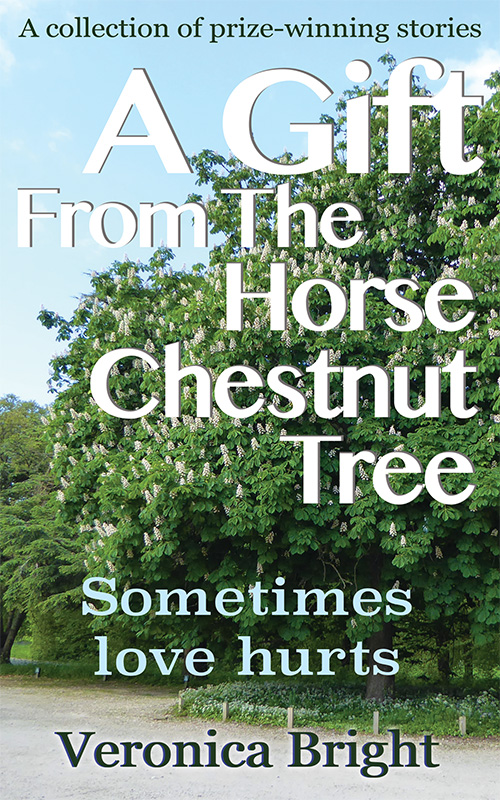
A gift from the horse chestnut tree

A Gift From The Horse Chestnut Tree

Sometimes love hurts

Children. They don’t always have an easy life.

Susan is caught up in her mother’s grief.

Jessica has been very ill, and now she has another problem.

A fourteen-year-old inner-city boy goes on holiday for the first time.

Short stories to challenge your perception of childhood.

Available here

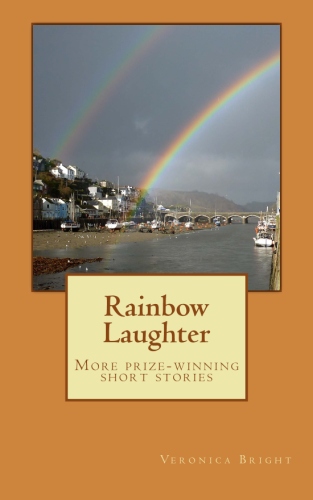
Rainbow Laughter

Rainbow Laughter

Wrong place? Wrong time? Or both?

You’ve only got one life, haven’t you?

Rainbow Laughter is a collection of nine insightful and powerful short stories about ordinary people, growing and changing, searching for hope when all seems lost.

Every story has won a prize in a competition.

Available here

How to create believable characters using the Enneagram

Every good story needs characters who are so real, your readers feel they would know them the moment they walked into the room. Veronica Bright’s aim is to help you create realistic, believable characters, who will have your readers rooting for them all the way through the ups and downs of your story. She tells you about the ancient wisdom of the Enneagram. This is a tool for understanding human nature. It points out the unconscious motivations behind the ways we react, and shows how characters may change and grow in the unfolding of a plot. There are helpful examples of many character combinations throughout the book, and also eleven sections providing exercises to help you consolidate your developing knowledge. If you want to understand people better, improve your skills and make your fictional characters memorable, How to Create Believable Characters Using the Enneagram is waiting to help you.

‘A fascinating approach to creating characters – and understanding our own characteristics. I recommend it.’

Della Galton, author and creative writing tutor

‘Getting the characters right is the key to good fiction. This book makes that so much easier.’

Linda Lewis, author and creative writing tutor

Available here

Note: The related stories mentioned below are nothing to do with Veronica’s work.

James Walker

Biography

Plymouth’s own pot-poet. Uncensored and unread! A struggling writer with too heavy a pen.
A comedian with no jokes! Damning the drinkers, the hypocrite who smokes!

Practising musician –

Pro on the Bong-flute! I’m a worker trapped in the system, bound for the turning.
A politician’s statistic ‘’Keep the sheep working!’
A saver and collector of debt! Charged as the bank’s best victim. Self-published in a world of help yourself! A slave to the tick
In fear of the tock!

Who am I? But the writer of many letters, sender of none! What am I? But a man bordered by body and mind.
When am I? But in ever-present mood,
Never before or beyond!
Where am I? But here then gone in the blinking of a light!

Self-published works

book coverFleeting thoughts and Burning joints: Book One

Journey through a mind decorated with an eclectic mix of humour, revolution, paranoia, and engulfed by beautiful sea views. Fleeting thoughts, and burning joints… is a collection of image-bound poetry; with the inclusion of sonnets and haikus. Here, is captured the solitude of one Plymouthian’s imagination, and an introduction to alter-ego ‘The Smoking Joker’, covering the literary world in a thick haze of cannabis smoke.

Purchase as paperback

Purchase as Kindle version

The second son: (An uprising)

SECOND SON COVERA contemporary collective concerning cannabis and culture, with creative content.

Purchase as paperback


No More Augusts

(A tribute to lost children)

I was born in an August

And I died in a March

Children deserve splendid summers

My guardian angels slept and never knew

The pain and misery they put me through

Those words of spite, those tearful nights

As punches rained down, on my empty frame

They saw my pinched face, they knew my pain

No long summer days, just August sighs with

Locked doors, and kept out of sight of

Caring friends, who shared their bread

Whilst I lay shivering on my pee stained bed

Alone, frightened, and unfed,

Waiting for the handle to turn

And then to be pulled and pushed again

Pushed and punched, then locked away for

Another turn, another day then

Water streaming down my throat, depths below

Hands above, holding me down until I choked

Then back to my lonely room and eating salt

Where were those caring souls,

Whose jobs defined to watch for

Sights, and sounds and signs

To intervene, to stop my screams,

To hold me close for just one night

To hold my hand, and touch my face

With gentleness and not just rage

The final blow when it came, brought end for me

And shame for them, and yet

No lessons learnt, one child in vain,

Others waiting in the lane.

Summer is not just holidays,

For some it means abuse, neglect, ongoing pain then

More excuses, more commitments, nothing done.

I was just another one,

Others waiting in the lane.