Author: PWG Publisher

New book release ‘Sixteen and All That’ out today

New release

Sixteen and All That

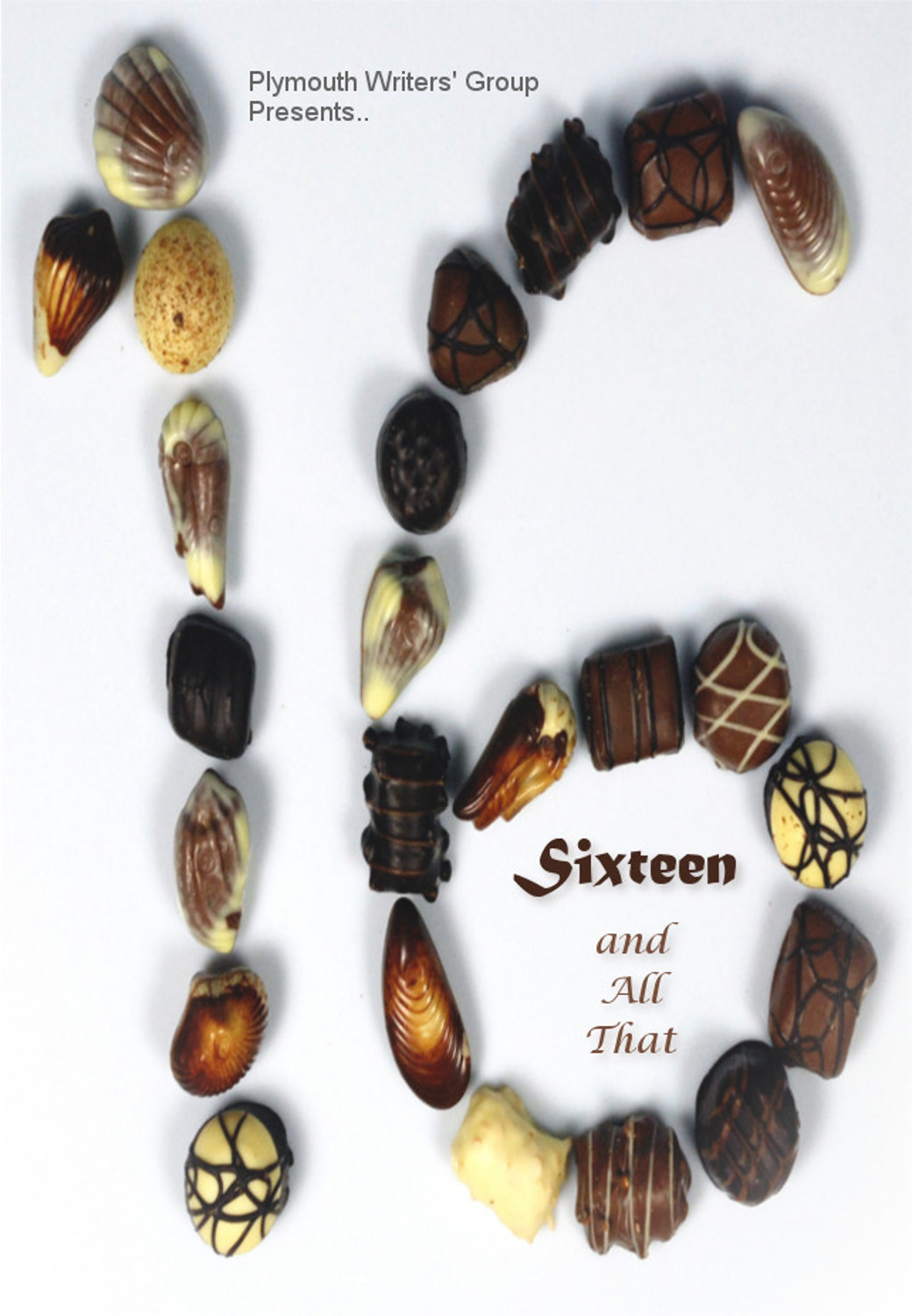
Sixteen and All That coverWelcome to the third Anthology of works by members of the Plymouth Writers’ Group. For this year, 2016, we have worked on the theme of ‘Sixteen, And All That’ which gives scope for following the theme of Sixteen, or not, as the writer chooses. This Anthology represents a myriad of ideas and perspectives from a diverse and talented group of writers, and reflects the friendly and neutral space that we have created for our meetings with their frank and honest feedback. Since its foundation ten years ago PWG has established itself as a leading writing group in Plymouth and the surrounding area, and it is also recognised as a premier writing group in the South West.

Featured writers

Mr Matt Ewens, Mary Curd, Louis Fletcher, Alan Grant, Elaine Dorr, Moyra MacKyan, Charles Becker, Birute Brown, Veronica Bright, Aia Peterson, Sarah Adams, John Curry, Debbie Clement-Large, Mary Thomas, Uju Okorie, James Walker, D Bruton, Marcia Woolf, Gwenda Major, Peter Newall, Emma Myatt

BUY NOW FOR ONLY £5.99

Kindle version is also available for only £1.50

Pages: 182

“Once again we are to be delighted and intrigued by the tour de literary force that is the now the annual anthology of shorts stories and raconteurial delights from the long established and wholly reputable body ‘The Plymouth Writers’ Group’.Mike Sullivan

Always a splendid read; this latest issue excels in that it also enjoys a variety of contributions from writers outside the group. Its customary fictional cornucopia bejewelled with stories from writers scattered wide around the globe and representing the winners, the runners up and the highly commended from the group’s recent and eminently successful international short story competition.

There can be few genres not touched upon here, caressed even, by the lightest touch of the assorted authors’ pens and whipped into a bookish confection to delight even the most jaded palates.”

Michael C Sullivan
Poet Laureate Emeritus

How to get published – A fantastic writing course at Plymouth University

How to get published – A fantastic writing course available

Cost: £110
Date: 29th October 2016 – 9:30am to 5:00pm

Further details:

Writers & Artists are joining forces with literature development charity Literature Works to bring you a day of getting to grips with the practicalities of writing. Including talks from an array of acclaimed authors, panel discussions with leading publishers, and insight from top literary agents, this is a day of discovery dedicated to how you can take your writing to the next level.

Taking place at Plymouth University, the day – which will cover essential aspects of the writing process, from creating a distinct voice through to character development and crafting an enthralling plot – will include: keynote talks from leading authors; a networking drinks reception with speakers; interactive panel discussions with highly regarded editorial directors and literary agents, who are always on the lookout for debut authors to add to their lists. Furthermore, these sessions will also help you to understand the current market and offer guidance on the all important manuscript submission process.

More information

Mandy’s Revenge

‘Trust my luck’ thought Mandy as her train finally arrived in Plymouth. ‘Nearly midnight. Bloody Dawlish. Should’ve been here 2 hours ago, no taxis, so I’ll have to walk to Mum’s. I wonder if Jason has been in touch yet?’

She was torn between ending the relationship and accepting that she might have acted hastily this afternoon when they argued on their mobiles, although she was still upset that some slut of a model might have compromised him at the fashion promotion.

Turning left she began the half-mile walk. Reaching the final corner, she stopped dead. Jason’s red Ferrari was in the car park of a local company, which was closed for the night. It was parked barely 200 yards from her parent’s home.

It had a distinctive personalised number plate and dark tinted windows, making it impossible to see the interior. Mandy crossed the road slowly, moving cautiously towards it, then realised that it was actually swaying from side to side. She heard a sharp cry, before the motion within the car increased significantly.

‘You bastard!’ Mandy cried out hammering on the roof with her fists. This generated even more activity from the interior. The car rocked violently, before a raised voice, this time distinctly female, shouted ‘Go away.’

‘Right!’ screamed Mandy.’ That’s it. All bets off. Stand by.’

She reached into the depths of her handbag and drew out her ultimate protection. The blade on the flick knife sprang out. She knew that each tyre on a Ferrari cost nearly £500 because Jason constantly moaned about it.

The whoosh of air, and images of banknotes disappearing into the atmosphere gave her a distinct satisfaction. The movement from within the car stopped as it gradually settled onto its suspension and she heard a muffled conversation before the offside door slowly opened.

‘What the hell are you doing here?’

‘Oh it’s you darling,’ said her mother emerging from the car, her hair dishevelled, wearing the remnants of an M & S thong and wraparound black velour skirt. ‘We thought it was a sex pervert on the prowl.’

‘We? Who’s that!!’ Mandy screamed, as a middle aged man struggling to pull his trousers back over his shoes, tumbled out of the driver’s door.

‘Sorry darling. This is Philip. He used to be in the Navy.’

‘What are you doing in Jason’s car? Where is he?’

‘Well he turned up unexpectedly tonight looking for you. Said you’d had some sort of a tiff. Wanted to surprise you. Philip’s an absolute car freak so when Jason offered to let him have a go in his Ferrari, we jumped at it, but we only got this far, then decided to stop. It makes a such change from the Robin Reliant.’

‘Mum, where’s Jason?’

Sat at home; waiting for you. He’s been there a couple of hours. Why?’

‘Mum. I’ve just done 4 blow jobs at £500 each on his tyres. He’ll go absolutely spare.
And he did.

The Perfect Stroke

PWG International Writing Competition 2016 highly commended Emma Myatt 

She begins with a length underwater.  Down here everything makes sense and she remembers being here before. She can hear her heart and feel every muscle in her body. She’s free. She comes to the surface at the deep end, takes a breath, executes a supple turn and starts her swim.

Pull, kick, glide… Eleven strokes to a length, a longer glide to the wall and a silky flick to turn. Every now and then she throws in a few freestyle lengths to give her neck a rest. The blue swimsuit is an extra layer of skin, bending and flexing with her body. At the pull she reaches ever further, with the kick she propels herself forwards as hard as she can and at the glide she must be like an arrow, perfectly straight, tips of toes to tips of fingers. Pull kick glide goes her body over and over again in search of the perfect stroke.

There’s always something wrong. One finger will be slightly in front of the other. One toe lags below. Her stomach is more clenched on one side. It’s hard work. Her breathing, too, must be perfect; start the exhale just as her arms are reaching forwards for the glide. The exhale must finish just as her head is reaching its highest point. She wishes she could control which way the bubbles flow but they’re haphazard, running up her face and past her ears.

Pull, kick, glide and she’s pretty sure she’s approaching length number 50, so she makes the length only take seven strokes, gliding spearlike further with each stroke.

Someone’s getting into her lane.

She swims right down the middle of the lane, fast, but the person comes in anyway. It spoils everything and wrecks her count but she’s no choice except to finish the swim. She can’t change lanes partway through. The person is a man – even worse – and he’s wearing blue trunks. Her colour. She turns without giving him any attention at all and pushes off the wall, furiously reaching into the first stroke.

All the way up the pool she can feel him behind her like a shark and her breathing has to change to drive her faster. He must not overtake, that would just ruin everything. At the turn she sees him a quarter of a length behind and is relieved; they’re a similar speed.

She swims on but it’s all ruined. She wants to sink, simply let go and sit on the bottom and breathe there; be unseen until the pool is closed and she can continue on her own, alone. She’s no choice but to leave the pool now.

At the shallow end she touches the wall and bounces up high from the bottom. She rises up out of the water and onto the side.

‘Sarah!’ she hears, from behind.

Head down, she makes for the changing rooms.

He’s there, waiting, by the door. She stops. There’s nowhere to go, only the fire exit and that would make everyone notice.

‘Hey, Sarah.’ His voice is gentle.

‘What do you want?’ she says.

‘To talk,’ he says.

She holds both hands out in front of her. ‘No,’ she says.

‘Please, Sarah.’

But she squares her shoulders against him and slips past and leaves the building. A bus is there waiting.

The following day she’s cautious. She thinks she remembers a man in her lane. It could have been yesterday so she should be careful.

She changes into the swimsuit she bought at the pool shop, a red one. She doesn’t know if red will be all right, but it’ll disguise her a bit. It makes her feel strange, wearing red. She’s got a new hat, too, white with blue stripes. She can’t afford goggles too but she wears a different pair from yesterday, an old pair she found in a drawer.

There’s an empty lane which she takes as a good omen. She slips into the water. After a few deep breaths she sits down, curls herself over and kicks off, along the bottom. She covers the 25 metres with ease, flying along the bottom of the pool, touching the end, feeling as if she could swim forever.

She’s on length 87 when her goggles start to leak. This is a huge problem because if she stops, she’ll have to swim extra, to balance it out. She tries to carry on but her eyes sting and she can’t endure it. She stops in the deep end and adjusts her goggles. She’s just about to push away again when she hears two of the lifeguards talking in low voices.

‘You’d never guess, would you? She’s here every day. Can hardly see the scars. The attack-’

‘Shhhhh, she’s-’

Sarah shakes her head and swims off. None of her business. She hates it when people talk about other people. It’s happened to her sometime, though she can’t remember when.

She’s on 89, trying to work out how many extra she’ll have to do when it all goes wrong and a man gets into her lane. She shakes her head underwater. Was it yesterday there was a man? If she gets out he might follow her but if she carries on swimming he won’t be able to talk to her.

Pull, kick, glide she swims and the rhythm calms her. The man sets off before her, just as she’s about to reach the wall. She sinks down and breathes out a tower of bubbles in the water, watches them go to the surface and sees the man’s feet disappearing. Ahead of her is all right; if he’s ahead she can keep an eye on him.

At 99 she turns and swims back to the shallow end underwater. It hurts. Just halfway down the pool her lungs want to burst, but she pushes on. Spots dance in front of her eyes and a passing thought, just breathe it in, flits across her mind. She makes it to the end; she doesn’t know how but she does. The air is clean and warm and she gulps it down.

‘That was pretty good,’ says a voice. ‘Especially at the end of your swim.’

It’s a man and he looks familiar but Sarah cannot place him. She’s not got enough air to speak yet but she nods. She reaches up and pulls off her swimming hat, and notices it’s not her blue one. Strange, she thinks, and then she looks down and sees a red swimsuit. She frowns.

‘You have a lot of swimsuits,’ says the man.

Sarah stares at him.

‘I was here yesterday. And the day before.’

‘Did we… Did we speak?’ She manages.

The man smiles at her, and nods. ‘We spoke. We speak often. I know a little about you.’

‘I need to go,’ she says in a hurry. Something is wrong with his words. Sarah pushes herself up out of the pool.

Outside he’s there, waiting. He smiles a cautious, gentle smile. ‘I’m sorry, Sarah,’ he says. ‘I thought, I thought you might have…’ he sighs. ‘It doesn’t matter. Can I see you to the bus?’

She doesn’t say yes but he walks next to her anyway. A bus is there waiting for her. A woman – again, familiar – is standing next to the big door.

‘Hi Sarah,’ she says. ‘Good swim? Hiya, Duncan.’

Sarah’s mouth opens as she turns to look at the man. He’s smiling at the woman. Sarah wants to get back into the pool, where things make sense.

‘See you tomorrow?’ he says, as he turns away.

Sarah stares. And shrugs. The woman helps her onto the bus.

‘He likes you. And he’s okay. You can trust him; I’ve known him for years,’ she says to Sarah. ‘He’s been made redundant. You should be kind to him.’

‘What’s your name again?’ Sarah asks the woman.

‘Moira, love. I’m Moira. Not having a great day today, are we? One of your bad ones?’

Sarah shakes her head. Tears prick her eyes and make the world go blurry. She watches the fuzzy cars and people and houses slide past. The woman, Moira, is talking in a whispery voice behind her. Sarah can hear what she’s saying and it’s about her and it’s about that man, and she doesn’t want to hear so she starts humming a tune she knows but can’t remember the name of.

Pull, kick, glide goes her body, up and down and up and down and she’s building a pyramid of strokes; she’s been close to the perfect stroke a few times. It’s a good day. She’s seen Dr Memory, as Moira calls him, and he said she was making progress. Whatever that means. She can remember yesterday, and something last week.

When Duncan slips into her lane she smiles at him and says, ‘Hi, Duncan.’ The reward is a smile so bright it makes her insides go fluttery.

They swim together, side by side, and she likes the way his strokes match hers. He even shares her underwater world for a little while, before he runs out of air and bursts up to the surface. At the edge of the pool he laughs and calls her a mermaid, which she likes.

As they get out he says, ‘Would you like a coffee?’

She discovers he’s divorced and he’s lost his job, which should make him feel sad, but he likes coming swimming and taking the dog for a walk and he doesn’t mind, not really. ‘Another job will come along’, he tells her.

‘How long have we known each other?’ she says.

‘About two months,’ he says, studying her face.

She feels her heart lurch. She wants to run. He covers her hand with his own.

‘It’s all right, Sarah. I’m your friend. I just want to be your friend. Today seems like a pretty good day. Do you remember us talking yesterday? Moira said if you tried to talk about days before, it would help.’

Sarah looks and him and knows he is kind. He has a kind face. But she doesn’t want to talk to him about yesterday, or any yesterdays. There is something, some clue lurking there on the edge of her mind. She knows if she goes digging for it, she could dislodge it. But she shakes her head.

‘There’s nothing. I better go. Moira said there would be a bus for me.’

‘I’ll come with you. You look bonny today, Sarah,’ he says in his soft voice and Sarah feels a strange flutter deep inside her. ‘I’d like to help you get better. Moira said any new friendships are good.’

‘I’ll maybe see you tomorrow then,’ Sarah says.

Pull, kick, glide goes her body, over and over, making its own shapes in the water. Her green swimsuit makes her feel like a mermaid. I’m in love with the water, she thinks to herself. And every stroke feels close to perfect. Toes almost together, bubbles in a stream either side of her head, fingertips touching. Nothing else matters but this. Why can’t she live in the water? Then life would be all right. All the odd stuff that happens when she gets out, the lines that blur at the edges; all of this is gone in the water. In the water she knows who she is. She’s a swimmer, and she can count. She rolls over in the water like a seal, twice, at lengths 49 and 51 and the second time she feels the water caress every inch of her, feels some loose hair escaped from her hat, feels the wonderful weight of water on her back. It is beauty itself. She’ll swim further today. It might make the counting hard, but she’s sure she can manage it. It’s the only thing that doesn’t feel confusing.

But then it’s all ruined. Just as she turns at the deep end, she sees someone getting into her lane.

It’s a man. And for some reason, he’s waving at her.
 

WINTER IN TOMASZOW

PWG International Writing Competition 2016 highly commended Peter Newall

Leszek had been awake since before dawn.  He didn’t want to be; he’d been out drinking last night with a few university classmates, and he’d rather have slept it off.  But even before the grey wintry light came in through the window he was awake, lying with the covers drawn up to his chin, his head aching, looking at the ceiling.

The ceiling in his one-room flat was high, perhaps five metres high.   He cursed it sometimes, because it meant that the place never really got warm, even when the radiator was working properly.  In the middle of the ceiling was an ornate circular plaster rose.  A long brown flex descended from its centre, bearing a single light bulb under a white porcelain shade.

At one time a chandelier would have hung from the rose, Leszek was sure.  The building was in the style of a hundred years ago, and it was obvious from the clumsy internal walls that it had been divided up into these little flats much later.  Once, its three storeys would have contained the spacious apartments of the well-to-do of the town.

Next to the rose was a patch of ceiling where the plaster had fallen away, showing the wooden laths underneath.  During the day, if Leszek noticed it at all, the damaged part was just a brown, oval blotch.  Sometimes at night, though, lying in bed without his glasses, he saw the blotch as a bear, standing on its hind legs, complete with upraised paws and stubby tail.  Several times he’d dreamed about bears after falling asleep staring up at the ceiling above him.

Now, in the faint morning light he saw in the dark shape a different image; the head of an old man, bearded and wearing a tall hat.  He squeezed his eyes shut until he saw stars, then opened them again; the old man was still there.  Why he would see this image for the first time today he wasn’t sure; perhaps it was someone who had once lived here.   Leszek did wonder occasionally about the people who had called this building their home before him,   people who had eaten, drank, argued and loved here, who had brought up their families here, who had walked up and down the wooden staircase with its curved balustrade, seen the sunrise through the tall windows, perhaps even lain and stared up at the ceiling rose like him.  Once he’d asked the garrulous old concierge if she remembered the place before the war; she looked at him oddly, then cleared her throat and said she had been too little then for her to remember anything at all about those days.

There was no point staying in bed any longer, Leszek decided; he wouldn’t go back to sleep now.  He swung his legs from under the covers and felt for his slippers on the linoleum floor.  He washed his face at the sink; the water was freezing cold.  He fumbled for his glasses on the table, found the matches and lit the gas ring.  Its hiss was comforting, and Leszek stood and watched the little blue crown of flame for a moment before putting the kettle on for tea.  While he waited for the water to boil he pulled on his clothes, jeans, a woollen shirt and a heavy sweater.  His feet felt chilled, and he found some thick socks and put them on too.  He padded over to the window to see how the day looked outside.

The sky was thickly overcast, and the courtyard below him was full of snow.  Snowflakes were drifting down slowly through the grey air; snow had covered the black billets of firewood piled against the brick wall and coated the steps and window-ledges like thick sugar icing.   The smooth white quadrangle of the yard was marked only by the glassy scar of the path trodden from the back door to the street gate.   It was certainly cold; there was a thin rime of ice inside the bottom edge of the windowpanes.  The mottled black-and-brown dog that usually prowled around the yard or slept on a piece of sacking next to the gas tank must have found a warmer place, for he was nowhere to be seen.

But to Leszek’s surprise someone was out there.  A young woman, wearing only a short yellow dress, was standing in the middle of the snowy yard.   She stood out starkly, the only coloured object in a black and white landscape.  As Leszek watched, she began to twirl around slowly, arms outstretched, lifting her face to the sky.

His first thought was that she was drunk, but as he stared through the window pane at her Leszek decided she could not be; her movements were too assured and graceful, her features too composed.  But something had driven this woman  to stand and spin around like a little girl playing ballerina, out there in the empty courtyard without a coat or a scarf or a hat in the falling snow, under the eyes of the neighbours.

Now she stopped turning, slowly lowered her arms and stood still, head bowed.  Snowflakes fell onto her thick dark hair and remained there, resembling a bridal veil.  The picture made Leszek uneasy.  He wished the woman weren’t there, and he wished he hadn’t seen her.  But now that he had, the scene was so strange, so unsettling, that he could not ignore it.  He decided to go out and speak to her, offer help; even if there were nothing he could do, he might find some explanation for her behaviour and resolve his unease.    He tugged on his boots, clattered down the worn wooden stairs and pushed open the door onto the snowy yard. His glasses fogged up as soon as he came outside, but even so he saw a curtain move behind a window on the first floor.

From his window he’d taken her to be very young, but as Leszek came close he saw that she was at least thirty.  She was looking down, her head turned away, and did not look up even when he was standing next to her.  Her jaw, fine-boned, was sharply angled above a long neck.  Her eyebrows were dark and strongly marked.  She was thin, her skin pale, almost translucent.  Her legs below the yellow summerweight dress were bare, with lace-up heeled shoes half disappearing into the crusty snow.

‘Excuse me, Miss,’ he said, ‘are you all right?’  Sensing that was rude, he tried again: ‘Do you need any help?’

She looked at him, unfocussed, as if she’d only then become aware he was standing beside her.  ‘No,’ she said slowly, ‘not now.  It’s too late now.’  Her voice sounded flat and muffled in the snow.   She looked away toward the corner of the courtyard.  Leszek looked there too, but could see nothing, only snow falling softly in front of the brick wall.  Spreading her arms out once more, the woman began to sing, not loudly, but with great sureness:  ‘My darling, how about dropping in to Tomaszów for a day?’ Her voice was pitched unusually low, almost husky. It sounded strange coming from such a slight, delicate frame.   Maybe there’s still that golden dusk there, that same September silence,’ she sang.

Leszek didn’t know this song about his town, Tomaszów, but it seemed to be about lost love.  That would explain it, of course; there had been an affair, her lover someone in this building, and she has just found out it has gone wrong.  Distraught, she’s run out into the snow just as she was.  There was no mystery, no need for concern.  In a while she would recover herself and leave, or else the boyfriend would come out and ask her back inside.   She didn’t look upset, true, but you couldn’t always tell, and nobody stands spinning round in falling snow unless they have been knocked off balance somehow.

Still Leszek hesitated.  Yes, but who wears a short summer dress, even inside the house, in the middle of January?  And those old-fashioned shoes?  Something wasn’t right, something he couldn’t quite identify, but there was nothing he could do.  He shrugged and turned away.

‘Did you know this was the main house in the ghetto?’  The woman had spoken to him.  Leszek stared back at her over his shoulder.  His eyes met hers for the first time; they were large, dark brown or even black, set wide apart in her narrow face.  At first they struck Leszek as simply expressionless, but as he stared into them, they seemed to be not just without expression, but blank, empty.  Although the woman’s face was turned directly to him, Leszek felt that her eyes were not looking into his at all.  ‘It was from here they took everyone,’ she said, ‘from this yard they took everyone away.  Nobody helped then, and now it’s too late.’

He realised she must be speaking of what happened during the war, fifty years before he was born.  He knew a bit about it; everyone did, even though it hadn’t been mentioned in the history classes at school.  But he had never heard it happened here in Tomaszów.  He didn’t even know there had been a ghetto here.   He shivered and folded his arms, jamming his chilled wet hands into his armpits; his sweater was wet now from the still-falling snow, and the damp cold was getting in under his shirt.  But the dark-haired woman stood stock still among the drifting snowflakes, showing no sign of being cold.  He looked hard at her; she was so pale that she seemed almost transparent.  It struck him that her hair was in an old-fashioned style, too, rolled at the front above her forehead.  She was looking past him again with those blank eyes, scanning the windows of the apartments, and humming softly to herself.  Leszek felt afraid, of what precisely he wasn’t sure, but afraid.  He turned and hurried back across the yard towards his flat.  His feet seemed to drag in the snow.

 ‘In this room, where they’ve put other people’s furniture…’ he heard her sing as he dragged open the heavy ground floor door.  He felt something like panic grabbing at him.   He threw himself through the doorway, skidding, almost falling on the worn black-and-white marble tiles in the hallway, and banged the door shut behind him.  Recovering his balance, he ran up the stairs to his flat.

Back inside, he strode across to the window without even taking off his wet boots.   Pulling the curtain aside, he looked down into the yard.  It was empty.  He stared, bewildered, but the woman was not there.  There was nobody there. The rusty metal gate to the street was shut.   He saw the marks of his boots in the soft snow, a track going out to the middle of the quadrangle and back in a shape like a hairpin, but he couldn’t see any other footprints.  Leszek peered hard through the drifting snowflakes.  There were no other footprints.  Of course, if she’d kept entirely to the hard, icy path leading to the street, she might not have left any.


Includes a few words from the song ‘Tomaszów’ by Julian Tuwim, translated from the Polish by the author.

The Keepmeout

PWG International Writing Competition 2016 highly commended Gwenda Major

My name is Victor.  My day starts later than most as I try to sleep until five o’clock in the afternoon if I can.  This is not easy because of the noises outside.  I have learned to ignore the music from radios, the chatter of my neighbours and the barking of the dogs.  Otherwise I would not sleep and then I could not do my job properly.  My mother tries to move about the room quietly.  She says she did the same when I was a baby so it is no hardship for her.

When I wake I eat a bowl of maize porridge and some mealie bread straightaway for I have a long night ahead.  Then I wash and put on jeans and a shirt.  My mother always has my uniform carefully folded in a bag ready for me.  She knows it is important for me to look smart.  She is proud of my work and boasts to our neighbours about what I do.  Next I bring my trainers down from the roof where I keep them in a plastic bag.  Also my bicycle.  It is necessary to be careful where I live.

At six o’clock I leave Imizamo Yethu which is near Hout Bay along the coast from Capetown.  I cycle through the township, past the spazas and the little school and church and out on to the main road.  Already the shebeen is full of men.  Our sorghum beer is very popular.  Near the road I leave my bicycle with my friend David who will look after it until my return in the morning.  If I am lucky I catch the bus up the coast without a long wait.  I get off at the stop outside Camp’s Bay and cross the road to the gates of Bay House.  When I arrive I must press the button and speak my name so that they can open the security gate.  It rolls very slowly and very quietly aside, allowing me to walk up the long curved driveway to the house.

The gardens of Bay House are very beautiful.  When I describe them to my mother she cannot believe what I am saying. She says paradise must be like this.  The palm trees sway when the strong wind blows.  We call the wind the Cape Doctor.  This is because it blows all the pollution away from Capetown and makes the air fresh and sweet.  Here and there in the garden are ponds where koi carp swim.  Some of them are orange, some black, some pale and pink – a rainbow nation, just like South Africa.

Bay House has balconies facing the ocean so that the guests can sit and watch the view and the sunset over the Atlantic.  In front there is a pool surrounded by sunbeds which are covered in white towels.  It is Joseph’s job to clean the pool every morning.  I have often watched the way he sweeps the surface with his net to remove any flies or leaves that have fallen in during the night.  Joseph always moves slowly.  He is never in a hurry.

Beyond the pool is the dining room where the guests eat breakfast and lunch.  Maureen is in charge of the kitchen.  She is very proud of her food and smiles when the guests compliment her on her smoked chicken salads.  Maureen also lives in Imizamo Yethu but she goes home as I arrive because Bay House does not serve evening meals, only lunches.  In the evenings the guests walk or drive into Camp’s Bay where there are many restaurants serving all manner of food.  If they walk there Mr Reiter advises them not to walk back but to take a taxi.  It is best to be cautious he tells them.

My work really starts at seven o’clock when Mr & Mrs Reiter lock up the reception area and go up the slope to their own house behind the guest house.  This house is large and white and behind it are the Twelve Apostles mountains.  When I arrive at Bay House I change into my uniform of smart grey trousers and a starched white shirt with epaulettes.  I have a badge which says ‘VICTOR / Security’ so that people know who I am. My first task is to remove all the towels from the sunbeds and put them in a big basket ready for the maids in the morning.  Then I take the mattresses off the sunbeds and lock them away in the storeroom beside the pool. I walk all around the garden every half hour to check that everything is in order.

Some of the guests like to talk to me as I make my rounds.  They like to know my name and where I live and ask me what it is like there.  Some of them have been on a township tour and tell me how friendly everyone was and how much they admire the people who live there.  I smile and thank them.  They say how wonderful it is that the township shacks are being replaced by brick and concrete houses. They tell me what a beautiful country South Africa is and how lucky I am to live here.  They tell me about their trip up Table Mountain in the revolving cable car and about the wonderful views down the Cape peninsula from the top.  They tell me about their ride across to Robben Island on the ferry and how sad they feel about what was done to political prisoners there.  They say they admire Mr Mandela because he had dignity and did not seek revenge.  I nod and tell them that yes, we are very proud of Mr Mandela.

A little later other guests start to return from their evening out.  They pass their key fob over the sensor and the big gate slides silently across so that they can drive in.  As they walk to their rooms they greet me and tell me what they have eaten and which wines they have drunk.  They clap me on the back as they go to bed.  “Good night Victor” they call.  When they are ready to leave many of them give me money, ten or twenty Rand which they press into my hand as if it was a secret between them and me.  I smile and thank them.  I think they like me because I am polite.  They also like my clean, smart uniform which makes them feel safe.  They sleep better in their soft wide beds because I am here, awake in the garden.

The guests like to know about my life but I do not tell them the truth because I do not believe they want to hear it.  I do not tell them that my Xhosa name is Sizwe which means nation.  I do not tell them that there are six of us living in one room at Imizamo Yethu.  I do not tell them we came from the Transkei in the Eastern Cape when I was eight because my father needed to find work but that now he is dead and my mother has to look after all of us on her own.  I do not tell them that we have to fetch water from a pump that must serve many families in our area.  I do not mention that the sewage system cannot cope. Too many people have come to find work in Capetown since the Pass Laws were repealed.  I do not tell them that my oldest brother has Aids and can no longer work nor that my other two brothers have no jobs but hang about the shebeen all day with their gang.  There are many gangs in the township.  When a boy reaches twelve or thirteen he must choose which one he will join.  The gang gives us a feeling of belonging and teaches us to look after each other before all others.  It is easy to get guns in South Africa.

The guests are right. New houses are being built in our township but only three hundred concrete houses so far.  Most are like ours, built of corrugated panels held together with scraps of wood and tarpaulin.  From the distance our township looks quite pretty, especially at night.  There are walls painted in bright colours. The tangle of electricity wires hangs like a spider’s web overhead.  But when you get closer you see it in a different way.  You see that the shacks lean against each other, holding each other up like drunkards.  You see that there are piles of rubbish all around, old tyres, bits of cars and other junk where the children must play. You see the clinic where people go for treatment against Aids and the church where they go at the end when there is no more hope.

There are worse townships than ours.  More and more people come to the city to seek work.  There is not enough to go round.  I am one of the lucky ones but I am not like Joseph and Maureen and the other maids.  Joseph moves through his days in a dream, tending his garden, skimming the blue water of the swimming pool, feeding the koi carp.  Mr and Mrs Reiter call him ‘the garden boy’ although he is more than fifty years old, but Joseph does not seem to mind.  Maureen loves talking to the guests from all over the world and her smile is bright when they stop to chat to her.  She wishes them a good day and off they go for their trips to the winelands, their bus tours to see the penguins at Boulders Beach and their shopping trips to the Victoria and Alfred Waterfront.  They show me the necklaces and carved giraffes they have bought and boast of how they bartered for a good price.  They say there is nowhere like Capetown and that everyone should come here.

The premier of our Western Cape province tells us that we must welcome the tourists because our economy needs them.  We must smile and make them feel at home so that they will tell their friends to come.  Our Xhosa culture also tells us to welcome visitors.  It is right to do so.  Our premier promises us improvements but none come.  Now she has said they will erect a tall fence around the shanty shacks near the airport because the tourists do not like to see them when they first arrive.  And she says that people must stop selling in the streets and at traffic lights because it makes the visitors feel ill at ease.  But if there are no jobs what should people do?  Hungry men are angry men my father told me.  But then he died so now it is up to me.

Soon all the guests will be asleep.  Perhaps they will discuss what they might do tomorrow, a lazy day or a trip to the Kirstenbosch gardens?  Then they will lock their doors and turn off the lights and listen to the sounds of the night before they fall asleep.  That is when I will press the button to make the big keepmeout security gate slide silently open to let my friends in.  I have told them where the paths are and they know how to move without sound.  I am one of the lucky ones but it is not enough for me to be lucky.  I must look after my brothers too.  That is our way.  They will be here in a very short time from now.  Then they will do what they must.

Transmission

PWG International Writing Competition 2016 runner up Marcia Woolf

The pylon came when I was a child. It seemed to me then that it walked to us in the night, this skeleton tower lurching towards the village on its bony metal feet, picking its way delicately over the fields and hedges, a slender girl stepping across a lawn in wedding shoes. A fantastic creation of wire coat hangers and discarded bed frames, the pylon descended on us, stooping as a tall adult bends towards giggling children, awkwardly out of scale.

“What are you playing at?” it seemed to say, lacking the confidence to mingle.

The morning after the night this strange creature arrived, I opened my bedroom curtains and stared.  It was alone, as yet unconnected to its gawky family.  The pylon looked back at me balefully, plaintively, for it had just spent a dark night alone in a damp field, far from the neon buzz of its factory home.  An emigrant from another land, uncertain as to protocol.  My father came in: he was dressed and ready for work.  We stood together, gazing out at our new neighbour. I felt the familiar warmth of Dad’s arm around me, smelt the old tweed of his jacket.

“What do you think?” he asked.

I beamed, excited by the novelty, the modernity, the 1960s space-age glamour of this electric rocket towering skywards, that had turned the farmland beyond our garden into our own little Cape Canaveral.  With a knowing wink of its homage to Eiffel, it seemed to fill the air with the scent of romantic electricity; to proclaim its kinship with the beacons and lighthouses and skyscrapers of the industrial world; at once steely and transparent, trim as a goalpost and rooted as an oak. It had come to stay.

My father, laughing, picked up his hat and kissed me goodbye, his sandy hair brushing mine as we parted.  He kissed my mother too, in the hall: out of my sight but where, I knew, he would be holding her near, stroking the soft curve of her back, gazing lovelorn into the dark olives of her unflinching eyes, inhaling the woody aroma of her mysterious perfume.  They hated to part, even for the few hours of the working day.  The door closed behind him and I heard her sigh, heard her travelling slowly and sadly along the hall, doubtless running her fingers over the table there to check for dust.  Pricked by guilty jealousy, I looked down at the jaunty yellow pattern of tractors and haystacks on my flannelette pyjamas, sensing all the time the watching gaze of the angle-iron, an alien Peeping Tom, an outsized invader, desperate to learn our human ways.

At first, we were aware of the pylon nearly all the time. It was a talking point for customers chatting to my mother in the village shop, almost as if they expected her to have learnt the language of her interloping lodger and translate for him, to explain his fancy ways and unorthodox mien. My mother was a sensible type, not drawn to gossip or conjecture.  She nodded and smiled non-committally and placed the eggs carefully into her basket alongside the bread and the marmalade.  She was neither happy nor unhappy about the pylon: it just stood their quietly, minding its own business, doing what it had to do, and she respected it for that.  Let people talk and gawp in awe: what did they know, who did not live cheek by jowl with the incomer?  This stranger promised power and light where once there had been none: it seemed churlish to resent its presence and even more foolish to wish it gone.

A few days afterwards I came home to find the pylon had been connected to its distant tribe by skeins of wire. Men with ladders and special tools had come in gangs and accomplished this astounding feat in hours.  My mother had stood admiringly on the back step, watching their progress as she drank her morning cup of tea, fascinated by the adept skill of the men in denim uniforms, noting the muscular ease with which they scaled the spike, their shouted instructions ringing from the metal minaret like calls to prayer.  When I was an adult, and she lay dying, my mother recounted how one of them had smiled cheekily and winked at her, and practised whistling to her as men do to women they cannot have (and, in truth, do not desire).  For a moment she considered waving back, calling out some flirtatious pleasantry, but instead had turned on her heel, gone back inside and slammed the door.  That regret had stayed with her for thirty years.

But then –  that day when I came in from school – she told me how hard the men had worked, how cleanly and efficiently, like a chain of ants; dwarfed but not daunted by their silver prey, to bring their project to fruition. The pylon now gave out a continuous thrum of satisfaction: purring, catlike, sometimes singing eerily long into the night or buzzing rhythmically in the wind. Its lullaby drew me to sleep, and its calling woke me. If this was the pylon’s language, we had no hope of speaking it.  I remember standing in the garden, mimicking the sounds of pylon interlocution, but could not grasp the finer points of its grammar and, though I hummed and squealed, it stood, impassively, not understanding or perhaps not caring to acknowledge that I wanted to be its friend.  Sometimes I lay on the grass, imagining myself the pylon’s equal, by squinting with one eye creating the illusion, reaching up with my hand to the place where its hand should be, longing to feel the giant’s steely fingers circle mine.

Although we grew used to its vast architecture, it was never familiar.  On sunny days it cast a crazy-paving web across the street, distorting hard mathematical precision into a shadowy net.  When the weather turned stormy it clung to the earth by its spiny claws, clenching sharp metal teeth against the barometric force.  It was a landmark for the traveller: the last thing visible on leaving the village and the first sign of home on our return. Sometimes it followed us in spirit form; hiding among the strands of lights on Blackpool pleasure beach; keeping a watchful eye over the rooftops on a school trip to Paris. Hardly a day went by when the spiky pinnacle did not hove into view, but still it startled me by its size, its stealth, its skill in stalking. Once spotted in whatever guise it had assumed, the pylon would freeze and take on an air of innocence.  These games often amused me, but as I began to leave childhood behind and had secrets of my own I resented being tracked and spied upon.  I shouted at it to leave me alone, but it merely withdrew a little and lingered in the distance, mournfully.

Over time, our little house seemed to settle ever further into the arc of the tower’s legs, brick and steel allied in order against the undisciplined hedge. Weeks passed, months passed.  Summers came and went.  The truth about Santa Claus was uncovered: I outgrew the tractor print pyjamas, and their replacements.  One day I staggered home, tacking with my ballast of schoolbooks in a November gale, to find my parents sitting together at the kitchen table, holding hands.  It was 4pm, already nearly dark.  Father still wore his work clothes, but the cups of tea on the table had gone cold, untouched.  The looming shadow of the pylon, cast by a street lamp, flickered on the wet window like a neighbour tapping to come in.

“What’s wrong,” it asked my mother, “why are you crying?”.

We had a quiet Christmas. There were no visitors that year, no decorations. The pylon served as our tree, stoic arms outstretched under a shallow weight of snow.

My father died in July. He went quickly in the end, but painfully.  Mother seemed unconcerned when I told her my O Level results.  She mentioned re-takes, but I’d had enough of school.

Later, of course, we heard the rumour: how the grey beasts came diseased with cancer and spread it to those foolish enough to live within their range. We looked at the pylon in a new light then.  I stood again in the garden and spoke angrily to it, this time in my own language augmented by the pithy wisdom of the drawing office where I now scratched my trade, but the pylon remained impervious under the sequin circle backdrop of the moon. After all, it had chosen to live with us, not us with it. I wondered if it had come to punish us.

I watched my mother grow small and pale but, despite my urging, she could not, would not, leave the place where her true love’s spirit dwelt.  The clock ticked and the pylon hummed.  When the bus stopped outside, top deck passengers craned their necks skywards and tutted in dismay at the plight of the tiny habitation cowering under the scaffold of the tower. Three years later,  I came to sell the empty house.  The agent whistled through his teeth and raked his hair.

“The pylon: it might put buyers off” he confessed, almost in a whisper.

We stood on the crumbling tarmac drive, where weeds took their chances through the cracks and the low cloud of the carport hung over us.  The agent looked at me curiously, his paltry valuation dangling in the August heat like a money spider hanging by a thread.

“I don’t know,” I said.  “I might move back here myself.”

The agent cocked his head, and ran a chubby finger round the sweaty collar of his shirt.  Then, embarrassed, aware of my recent loss, he inspected the dusty uppers of his brogues.

“You do know,” he said, “what people say?”

“It could be just coincidence.”

He peered at me again, searching my face as a lost man scans a map, desperately, recognising nothing.

“It could”, he conceded.

We remained there for several minutes, contemplating the Serengeti grassland of the lawn, the peeling paintwork on the lean-to porch, the kitchen curtain fallen into holes.

“I have good memories of this place.” I said.

“I’m sure you do.”

We shook hands and he meandered back to his company Mondeo, jangling the keys in frustration.  As he climbed in he turned and called, with no conviction, “You’ll ring me if you change your mind?”

I stayed under the awning for a while, until fat penny raindrops began to ping off the hard-baked earth, and I whistled, intermittently, so that the pylon would not know I was afraid.

***

Like Water Running

PWG International Writing Competition 2016 winner Mr. D. Bruton

Me and Julie and Col, way back, walking tip-toe tall and our heads held high, adding bits of inches to what we were then, and adding years, but only so in our thinking. And Julie said she’d marry me or Col one day, if we’d a mind to ask her and if we said ‘please’ and ‘pretty please’. And Col made a sound like being sick, like there was not a good taste in his mouth, so Julie punched his arm quick as a cracked whip and she said he should be so fucking lucky.

Mams and das we played sometimes, on the slumped stone steps at the back of her house, at the back of 15 Myreside Road, and Julie made a plastic teapot of strong tea that had no weight in her hands when she poured it – ‘milk and two sugars if you don’t mind, love, and put the milk in first, there’s a dear, it tastes better that way.’ I pretended to be going out to work in heavy boots, dancing it looked like, or like a skittery cow when it lumbers heavy and trotting from one field to the next and the farmer’s dog nipping at its feet. Julie tucked a bit piece in a tin box for my lunch and she said, ‘There,’ and to ‘Go careful now.’ Col was our sullen sulky lad and he folded his arms and said he wanted to go to work, too, and if that wasn’t happening then he wasn’t playing.

We smoked candy cigarettes with sweet lipstick-red tips, leaning up against the side of The Davey Lamp bar, pulling on them like they were real cigarettes, like we saw our mams and our das doing, and blowing blue smoke-circles into the air, only our circles had no colour even though our lips were perfect o’s – no colour at all, ‘less it was cold as nips and nicks; and we stuck our thumbs in the belts of our trousers and we swore like old men and spat in the street, and Julie was a better spitter than Col or me, and Mrs Hartman said she knew who I was and she’d tell my mam what I said and what I did.

So then we pretended we were flying, our arms spread wide in a Spitfire sky and we were planes swooping like swallows or swifts from one side of the street to the other and ‘dega-dega-dega’ and Mrs Hartman and her two stupid kids were instantly dead – dead as doornails or dodos or mutton. And the dizzy circles we drew in the road with our running were breathless loops in the air and we flew all the way to Victoria park, even though the day was dark and grey by then, and Col crying after us to wait up because his plane had engine trouble and he couldn’t run as fast as us.

Then on the swings and we were flying for real, as high as swings dare, the chains needing oiled and squeaking like banshee-whispers, up and up until the force of flying upwards felt the tug and tug of gravity and the chains went slack a little and our wooden seats jerked and we were falling then, which is only flying without the control. And Julie laughed, her hair behind her like a flung flag, then over her face, then behind her again.

‘I feel a bit sick now,’ said Col, and he did look a bit green about the gills – though we didn’t really know what that meant back then, ‘cept my mam had said it when our Kevin had taken the cooking sherry out to the shed and Kevin drank all that was left in the bottle and he was crooked when he walked out of the shed again and his spittle-words were all joined up so they made no sense, and our mam said then that he was looking a bit green about the gills, Kevin was, and he was promptly sick all over the kitchen floor, the dog barking and mam swearing like old men at the pub. And so, with Col feeling sick after the swings, I said he was looking a little bit green about the gills, and Julie said he should just go ahead and be sick and me and Julie’d watch.

A little later, Col’s mam called him in for his tea. ‘It’s mince and taters tonight,’ he said walking away from us, his spirits and his colour magically restored.

With Col gone it was quiet between Julie and me, and the day gave way to sudden-seeming night and shadows were quick and bold, and me and Julie held hands where no one could see. And she asked me if we’d be married one day, in a church with bells ringing, and flowers choking all the spaces and everyone wearing smart clothes, and Julie’s da giving her away, and empty Heinz beans cans and soup cans, their labels stripped off so you couldn’t tell, tied with old string to the back of a white car and clattering as we drove off for our honeymoon – which we also didn’t know what that was – a honey-moon?

‘And Col could be our real sulky lad still,’ I said.

Julie laughed and it was the sound of water running, and she kissed me, and it wasn’t like mam-kisses, the pink kitten-tip of Julie’s tongue in my mouth, and that felt like flying, too – a giddy soaring and the world all upside down and the breathless spinning of Spitfires shot and diving, and the chains on the swings slack and falling and the feeling in my stomach then.

Julie said she loved me. She knew, she said, because she had a funny feeling inside when we kissed, a feeling like a jam jar full of bees and the bees bumping against the glass as if glass could be surprised and the caught bees could find themselves in the open air again; and I said I loved her back, and we lay on the cool damp grass, still holding hands, and we counted stars like counting silver sixpences, and we made our thoughts and wishes into daredevil words spoken in whispers, and bats cut across the thrilled night sky.

I kept hold of that night, the memory of it, tight in my grasp, through all the years of school. Even when I was going out with Janet next door and she let me put my hand under her blouse to touch her diddies the size of small lemons, even then it was Julie I was thinking of. And I watched Julie grow from girl to something more, watching from a widening distance between us, and her hair the colour of crow wing and her diddies filling the front of her dress, and her lips painted red one day so she really did look grown. And there was a different boy every month for a while and then just the one boy and Julie dancing to his tune for a time.

One day, Col put his hand down the front of his trousers, fiddling, there in the street when the red-lipped Julie was across the road and walking wavy on her yellow high heels and not seeing us watching her. And Col said he would if she’d let him. And I spat in the road and I said Col should be so fucking lucky and I said he was a dirty get and she could do better than the likes of him – by which I meant me. And we went for a pint then in The Davey Lamp bar and I made Col pay and he bought a bottle of sweet stout for old Mrs Hartman who was drinking alone.

And the years are enough on us now so we don’t need to stand tall to be counted old enough, and me and Julie are not married or together, and life is a lot harder than we ever could have imagined as kids. My boots – hobnailed and dun – really are heavy, but going out in the morning is not like dancing at all. It’s cold and dark when the alarm clock breaks open the day like a new egg and my mam has to call me three times and she sends my da up eventually. And da says I should get a bloody shift on if I’m not to be late. And there’s a cup of strong tea – ‘milk and two sugars, thank you very much’ – waiting for me on the table downstairs and it’ll be cold if I’m not quick about it, he says.

And mam shouts up that there’s cheese for my bit piece in the cupboard but I’ve to make it myself because she’s got to get up the road to check on granda. And my da offers me a cigarette when I come down and we don’t bother with the smoke rings, pulling deep on the first smoke of the day and blowing ragged grey shapeless webs into the air and coughing like a pair of old cows and da grinding his teeth like he’s the cow with the colic. I have a new respect for my da these days, knowing he’s done what I’m now doing for all his years, and putting bread on the table for mam and me and the rest of the family, and his back is bent with the effort of it all.

‘Fuck, and it’s only Tuesday,’ I say.

‘Go careful now,’ my da says, meaning the language I’ve used, but he’s only saying that in case mam is not out of the door yet and can hear.

And Col swears for real, too, these days, every second blesséd word, and he wishes now he didn’t have to go to work, like we all do, and he’s sullen and sulky even without a drink on him. And Col drags his feet when he walks, his boots sparking on the stone path and his shoulders hunched against the day and against all the days.

I still see Julie sometimes and when I’ve a mind to I cross the street to speak to her. She’s got a kid of her own now and she’s a different shape altogether, even though she’s still pretty, and pretty enough Col still would if she’d let him. She has a house just two doors up from her mam and her da, 17 Myreside Road, and new curtains on the front windows. She says tells me she’s a single mam and she’s fine with that, and right enough there’s no ring on her finger as far as I can see.

And I hold my arms out from my sides sometimes, like we did once way back, trying to remember what it felt like then, and I run with the air in my face, running as fast as I can in my heavy work boots, and swooping like a summer-visiting bird or a Spitfire plane and running in circles like I’m running from disturbed wasps, but it never does feel like flying now.

As for that night, that Julie-and-me kissing-night, and that silver-sixpence-star-counting moment with bats in the air, and she said she loved me and I said I loved her back, well, that’s a shiny memory that I’ll keep in my pocket all my days, keeping it for when I’m on my own and it’s dark, or for when I see Julie and no one else is by and I remind her of the oaths we made under all of heaven.

Julie says I’m a daft bugger to remember stuff like that, a daft bugger and no mistake, and her face colours and her eyes hold stars in ‘em and she laughs then, and to me it is still like the sound of water running, and if I had any sense or balls or backbone I’d tell her that and risk sounding soft – but I don’t.


New release, Tide and Time

New release

Tide and Time

Tide and TimeTide and Time is the latest anthology published by the Plymouth Writers Group.  The book is divided up into stories relating to ‘time’ and ‘tide’, featuring poetry, flash fiction and short stories by members of the group.  The book additionally features five winning stories from our first writing competition.

Featured writers

Mary Curd, John L.Horsham, Louis Fletcher, Alan Grant, Elaine Dorr, Richard Brenton, Moyra MacKyan, Charles Becker, Birute Brown, Veronica Bright, Aia Peterson, Andy and Fay Williams, Sarah Adams, Matt Ewens, Rex Bromfield, Janet Newman, Kim Stringer, Tess Niland Kimber, Lidia A.Tsvetkova

BUY NOW FOR ONLY £5.99

Pages: 154


“Once again we are to be delighted and intrigued by the tour de literary force that is the now the
annual anthology of shorts stories and raconteurial delights from the long established and wholly reputable body ‘The Plymouth Writers’ Group’.Mike Sullivan

Always a splendid read; this latest issue excels in that it also enjoys a variety of contributions from writers outside the group. Its customary fictional cornucopia bejewelled with stories from writers scattered wide around the globe and representing the winners, the runners up and the highly commended from the group’s recent and eminently successful international short story competition.

There can be few genres not touched upon here, caressed even, by the lightest touch of the assorted authors’ pens and whipped into a bookish confection to delight even the most jaded palates.”

Michael C Sullivan
Poet Laureate to the City of Plymouth

Street Feet

I look at their feet when I’m sat on the street.

My cardboard cushion easing the pain,

Of sitting, legs crossed, eyes down, no frown.

Down at the ankles of those walking past

As I sit and wait for that tinkling plate

No looking up, no looking in, don’t let the person see you grin

No bingo game this – eyes down, line and house

My line costs ten quid, and no house in sight

But now it’s quiet, so slyly just check

Enough on the blanket to stop feeling wrecked?

New feet arrive; nice polished brogues

And next to his leather, high heels with bare toes

All brightly painted, like my hopes and dreams

Then down come the coins, and they walk on again

Bastards it’s foreign- just 100 yen!

Try changing that at my street exchange

What’s wrong with dollars, or Euros or pounds?

I’m the one sitting with my arse on the ground!

Hang on a moment, new shoes in sight

Old feet, swollen, ankles quite wide

Please rest a moment, then open that purse

Cascade your love down, onto my soul

Yet all I can hear, without looking up

Are words full of hatred, snide curses above

‘I know I’m a totally useless shit,’

But once I was innocent, sucking on tit,

Bonding with mother, not full of nits, like

My dog alongside me, which shivers – it’s rain

Time to consider; shall I increase the pain?

Look more pathetic, as hordes pass me by

Hang on a minute I’ve just got a pie!

Only half eaten, better than nowt

My dog’s bloody started, there’s crust on her snout

Oh let her have it, my time will come

Jesus it’s cold, it’s right up my bum,

My cardboard converter is less than my thumb so

Pull up the hood and cover the dog

Here comes a copper, a real PC Plod

He stands and he stares then he gives me a nod

‘Keep fucking moving you useless great sod’

That’s what I think, but I give him a grin

Cos his beat’s nearly over, and he don’t want me in

But the next one is looking for frolics and fun

‘Hello tramp, hello twat’, whilst I peering down

Look at his feet, and his boots are quite brown

Doctor by nature, Doctor Marteens,

Strapped up and ready, up to his shins, so

I move to one side as his kick’s coming in

My brain is more tricky than fixing my chin

And I’ve always liked soup through a cup and a straw

But as he fell on his arse pissed as a fart,

His boot hit my chest, and stopped my weak heart.